

Fraud Awareness and Prevention

Scammers are getting smarter. So are we.
Americans lost $12.5 billion to fraud in 2024 — a 25% increase from the year before. The good news? Most scams follow recognizable patterns. Knowing what to look for is your best defense. This page breaks down the most common scams, the warning signs to watch for, and simple steps to protect yourself and your loved ones.
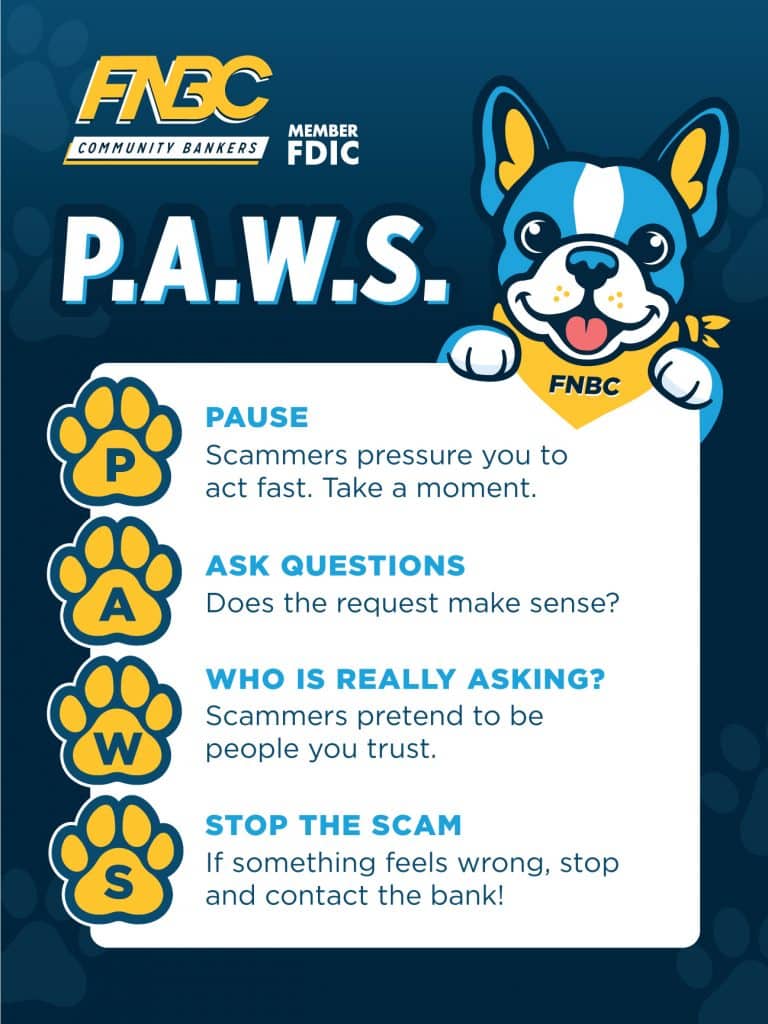
When in Doubt, P.A.W.S.
Common Scams to Know
Phishing, Smishing & Spoofing
Scammers send emails, texts, or make phone calls that appear to come from a trusted source — your bank, the IRS, a delivery company. These schemes are aimed at tricking you into providing sensitive information like your password or bank PIN. FBI Links in these messages often lead to convincing fake websites designed to steal your credentials.
What to do: Don’t click links in unexpected messages. Go directly to the official website by typing the address yourself, or call the organization using the number on their official site.
Impersonation Scams
Your phone rings and the caller claims there’s fraud on your credit card, someone hacked your bank account, you owe a tax debt, or your benefits will end today. They sense your panic and they say they can help. Government agencies like the IRS and Social Security Administration will never call and demand immediate payment or threaten consequences.
What to do: Hang up and call the agency or company directly using a number you find independently, not one provided by the caller.
Investment & "Pig Butchering" Scams
Cryptocurrency investment fraud, which the media commonly describes as pig butchering, is one of the most prevalent and damaging fraud schemes today. These often begin on social media or dating apps, where a scammer builds trust over weeks before steering you toward a fraudulent investment platform. FTC data shows more than $7.9 billion in losses to investment scams in 2025 alone, with a median individual loss of more than $10,000.
What to do: Be extremely cautious of any investment opportunity introduced by someone you met online, especially involving cryptocurrency.
Romance Scams
Scammers build fake romantic relationships online over weeks or months, then ask for money, often for a medical emergency, travel, or a business opportunity. Older Americans are frequently targeted, with romance scams among the most common schemes aimed at them. But younger people are increasingly vulnerable too.
What to do: Never send money to someone you haven’t met in person, no matter how close you feel or how convincing their story is.
Gift Card Scams
Some scammers reach out pretending to be your boss, a family member in trouble, or a government agency, asking you to buy gift cards for them. They’ll ask for the card numbers and PINs, and once those are handed over, the money is gone instantly with no way to recover it.
What to do: No legitimate organization, employer, or government agency will ever ask you to pay with gift cards. Ever.
Text Scams (Smishing)
You might receive a text message claiming there’s an urgent issue with your account: “Suspicious activity detected. Confirm your details now.” These scams usually include a link that sends you to a fake website or connects you to a fraudulent “customer service” line. Other popular lures include fake package delivery notices, expiring reward points, and traffic violation notices.
What to do: Don’t tap links in unexpected texts. Log in to your account directly through the app or official website to check for any real alerts.
AI Powered Scams
85% of Americans worry that scams are becoming harder to detect because of AI technologies. Fraudsters can now mimic human voices, write convincing emails, or even create fake “live chats” that look like real customer service. You might receive a call that sounds exactly like a family member asking for help or a message that seems perfectly written by your bank.
What to do: Establish a verbal “safe word” with family members to verify identity in urgent situations. When in doubt, hang up and call back on a known number.
Card Skimming
Skimming occurs when devices illegally installed on ATMs, point-of-sale terminals, or fuel pumps capture data or record your PIN. These devices can be nearly invisible.
What to do: Inspect ATMs and card readers before use, cover the keypad when entering your PIN, and check your account statements frequently for unauthorized charges.
Check Fraud/Check Washing
Fraudsters steal checks from mailboxes or businesses and use chemicals to “wash” the ink, allowing them to rewrite the check to themselves for a higher amount. They may also create counterfeit checks using stolen account information.
What to do:
Use secure mail drop-offs (not your mailbox flag), monitor your accounts regularly, and consider using digital payments or check security features like Positive Pay, if a business.
Account Takeover (ATO)
Scammers gain access to your online banking, email, or financial accounts using stolen credentials, often from data breaches or phishing attacks. Once inside, they change passwords, transfer funds, or add new payment details.
What to do:
Use strong, unique passwords and enable multi-factor authentication. Monitor your accounts for unusual activity and report anything suspicious immediately.
Your Fraud Prevention Checklist
- Use strong, unique passwords for every account and enable multi-factor authentication (MFA) wherever available.
- Regularly review your bank and credit card statements for anything unfamiliar.
- Consider placing a free credit freeze with the three major bureaus if you’re not actively applying for credit.
- Shred — don’t just toss — any documents containing personal or financial information.
- Never provide your Social Security number, account numbers, or passwords in response to unsolicited contact.
- If you did not initiate the contact, be cautious about providing personal information over the phone.
- Urgency is a weapon. Legitimate institutions will give you time to verify.
- Before sending money electronically, make sure transfers only go to people you know and trust.
- Talk to a trusted friend or family member before making large financial decisions.